If you have ever thought about launching your own skincare brand, chances are you have come across the term “private label body lotion manufacturing.” It sounds technical, but the idea behind it is simple – you get to sell body lotion under your own brand name, without having to build a factory, hire chemists, or manage production yourself.
In this guide, we will break down everything you need to know about private label body lotion manufacturing – how it works, why brands choose it, what the process looks like, and how to pick the right manufacturing partner.
What Is Private Label Body Lotion Manufacturing?
Private label body lotion manufacturing is when a manufacturer creates a body lotion using their own formulation, equipment, and expertise, and then packages it under your brand name. You bring the brand identity, marketing, and customer base. The manufacturer brings the formulation know-how, production facility, and quality control.
This is different from making a product entirely from scratch on your own. With private label manufacturing, you skip the heavy lifting of research and development, raw material sourcing, and factory setup. You simply choose a formula (or request a custom one), finalize your packaging and branding, and the manufacturer handles production.
It is a popular route for skincare entrepreneurs, D2C brands, salons, spas, and even larger retail businesses that want to add a body lotion to their product line without the cost and risk of building manufacturing capability in-house.
Private Label vs Third-Party vs Custom Formulation
These three terms often get mixed up, so here is a quick distinction:
- Private label manufacturing means you choose from a manufacturer’s existing range of formulations and simply rebrand it as your own.
- Third-party manufacturing is a broader term that includes both private label and fully custom production done on your behalf by an external manufacturer.
- Custom formulation means the manufacturer develops a completely new body lotion formula specifically for your brand, based on your requirements.
Many manufacturers, including body lotion manufacturers in Ahmedabad and across Gujarat, offer all three options so brands can choose what suits their budget and timeline.
Why Brands Choose Private Label Body Lotion Manufacturing
There are a few clear reasons why private labeling has become the go-to choice for new and growing skincare brands.
Lower Investment, Faster Launch
Setting up your own cosmetic manufacturing unit requires significant capital – machinery, raw materials, licenses, and skilled staff. Private label manufacturing removes this barrier. You can launch a body lotion brand in weeks instead of months, with a fraction of the investment.
Access to Expert Formulation
A good private label body lotion manufacturer has years of formulation experience. They understand ingredient compatibility, stability testing, and what works for different skin types. As a brand owner, you benefit from this expertise without having to build it yourself.
Focus on What You Do Best
When manufacturing is handled by someone else, you can put your energy into branding, marketing, and customer relationships – the areas that actually grow your business.
Scalability
Private label manufacturers are built to handle production at scale. Whether you need a small trial batch to test the market or a large wholesale order once your brand picks up, a capable manufacturer can scale production with you.
Reduced Risk
Cosmetic manufacturing comes with compliance requirements, quality testing, and shelf-life considerations. An experienced manufacturer already has systems in place to manage these risks, which protects your brand from costly mistakes.
How Private Label Body Lotion Manufacturing Works: Step by Step
Understanding the process helps you know what to expect when you approach a manufacturer.
Step 1: Initial Consultation
This is where you discuss your brand vision, target audience, and product requirements with the manufacturer. You will talk about whether you want an existing formula or a custom one, your budget, expected order quantity, and timeline.
Step 2: Formula Selection or Development
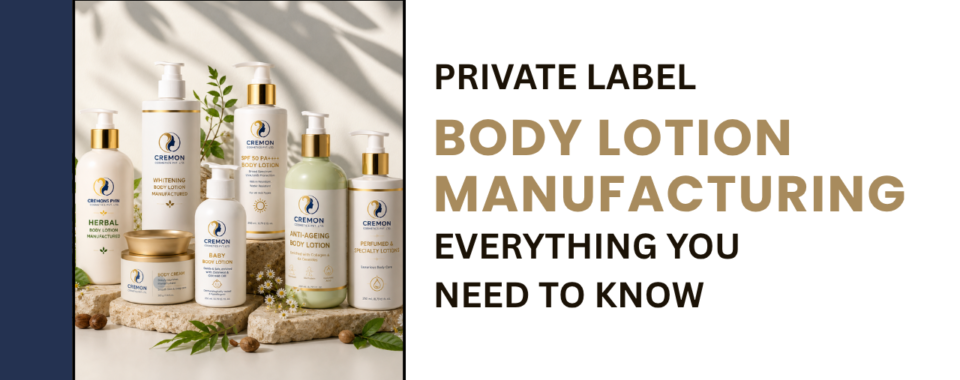
If you are going with an existing formulation, the manufacturer will show you samples to choose from – moisturising, herbal, whitening, SPF, or specialty lotions. If you want something custom, their R&D team will develop a formula based on your specifications, which may involve a few rounds of sample testing and feedback.
Step 3: Packaging and Branding
You select your packaging format – bottles, tubes, jars, or pump dispensers – and finalize your label design. Many manufacturers offer in-house design support or work with your existing brand guidelines.
Step 4: Sample Approval
Before bulk production begins, you will receive a sample batch to review texture, fragrance, packaging fit, and overall quality. This is your chance to request adjustments before committing to a full order.
Step 5: Bulk Manufacturing
Once the sample is approved, the manufacturer moves into full-scale production. This includes mixing, emulsification, filling, sealing, and labeling – all carried out under controlled, hygienic conditions.
Step 6: Quality Testing
Every batch should go through quality checks, including stability testing and microbiological testing, to ensure the product is safe and meets shelf-life expectations.
Step 7: Delivery
The finished, branded body lotion is packed and delivered to you, ready for sale through your chosen channels – online store, retail shelves, or distributors.
What to Look for in a Private Label Body Lotion Manufacturer
Not all manufacturers are the same, and choosing the right partner makes a big difference to your brand’s success. Here are the key factors to evaluate.
Manufacturing Experience and Reputation
Look for a manufacturer with a proven track record in cosmetic and personal care production. Years of experience usually mean better formulation knowledge and fewer production issues.
Range of Formulations Available
A manufacturer offering a wide range of body lotion types – herbal, Ayurvedic, whitening, moisturising, SPF, anti-ageing – gives you more flexibility to build a diverse product line as your brand grows.
Quality Certifications
Check whether the facility is GMP certified and follows proper regulatory compliance, including CDSCO guidelines applicable in India. This is a strong indicator of consistent quality and safety standards.
Minimum Order Quantity (MOQ)
MOQ varies between manufacturers. If you are a new brand testing the market, look for a manufacturer who offers flexible or low MOQ options so you are not stuck with excess inventory.
Packaging Flexibility
Your manufacturer should be able to support different packaging formats and help you create a look that matches your brand positioning, whether that is premium, natural, or budget-friendly.
Turnaround Time
Ask about typical production timelines from order confirmation to delivery. A manufacturer with efficient processes will help you launch faster and restock without long delays.
Location and Logistics
Working with a manufacturer that is well located – for example, body lotion manufacturers in Ahmedabad and Gujarat are centrally placed for businesses across western India – can reduce shipping costs and turnaround time, especially for bulk orders.
Common Challenges in Private Label Manufacturing (and How to Avoid Them)
Even though private label manufacturing simplifies a lot of the process, there are a few common pitfalls brand owners should be aware of.
Choosing a manufacturer based on price alone. The cheapest option is not always the best. Low pricing can sometimes mean compromised ingredient quality or inconsistent batches. It is worth balancing cost with quality and reliability.
Skipping the sample approval stage. Always insist on reviewing a sample batch before committing to bulk production. This protects you from receiving a final product that does not match your expectations.
Unclear communication about requirements. Be specific about your target skin type, fragrance preferences, texture, and any ingredients you want to avoid. Clear communication upfront prevents revisions and delays later.
Not checking compliance documentation. Make sure your manufacturer provides proper documentation, such as test reports and manufacturing licenses, especially if you plan to sell through retail or export internationally.
Is Private Label Body Lotion Manufacturing Right for Your Brand?
If you want to launch a skincare brand without the complexity of running your own production facility, private label manufacturing is one of the most practical ways to start. It works well for new entrepreneurs testing a product idea, established businesses expanding their product range, and even larger companies that prefer to outsource manufacturing and focus on distribution and sales.
The key to success lies in choosing a manufacturing partner who understands your vision, offers the right formulation expertise, and maintains consistent quality across every batch.
Frequently Asked Questions
1. Is private label manufacturing cheaper than building my own factory?
Yes, in almost all cases. Private label manufacturing requires no investment in machinery, facility setup, or production staff, which makes it significantly more affordable for new and growing brands.
2. Can I request a unique formula instead of an existing one?
Yes. Most private label manufacturers also offer custom formulation services, where their R&D team develops a new body lotion formula based on your specific requirements.
3. How long does it take to launch a private label body lotion brand?
Timelines vary, but with an existing formulation, brands can often launch within a few weeks. Custom formulations may take longer due to sample development and approval rounds.
4. Do I need any certifications to sell a private label body lotion?
Depending on your market, you may need to ensure your manufacturer is compliant with regulatory bodies like CDSCO in India. A good manufacturer will guide you through the necessary documentation.
5. What packaging options are available for private label body lotions?
Common options include bottles with flip-caps or screw-caps, laminated or aluminium tubes, pump dispensers, and jars – all of which can be customized with your brand’s label and design.