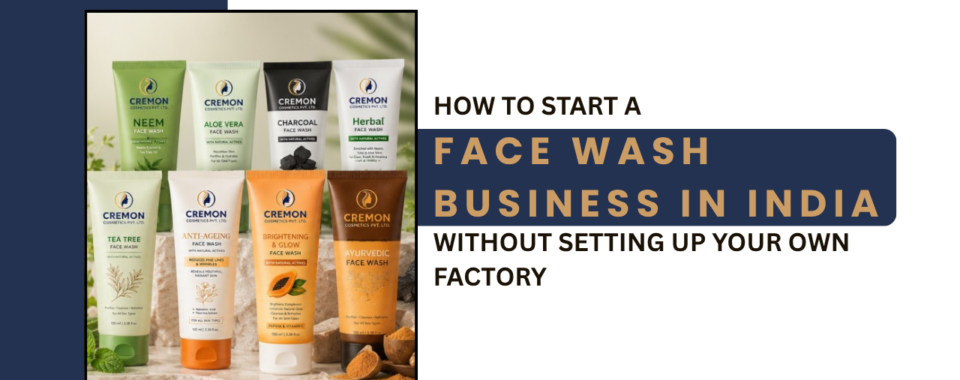
The skincare industry in India is booming, and face wash is one of the easiest products to enter the market with. But here’s the problem most new entrepreneurs face: setting up a manufacturing unit requires huge capital, technical know-how, regulatory approvals, and years of experience. So how do thousands of new skincare brands launch every year without owning a single manufacturing machine?
The answer is simple – private label and third-party face wash manufacturing.
In this guide, we’ll walk you through exactly how to start a face wash business in India without building your own factory, what steps are involved, and how partnering with an experienced manufacturer can save you time, money, and unnecessary risk.
Why Starting a Face Wash Business Doesn’t Require Your Own Factory
Many first-time entrepreneurs assume that launching a skincare brand means investing lakhs of rupees into machinery, raw materials, a production facility, and a technical team. This is one of the biggest myths in the beauty industry.
In reality, most successful Indian skincare brands you see today – whether on Instagram, Amazon, or in retail stores – don’t own factories. They partner with established cosmetic manufacturers who already have the infrastructure, formulation expertise, and certifications in place.
This model is called private label manufacturing (or third-party manufacturing), and it allows you to focus on what actually grows a brand: marketing, branding, and customer relationships, while the manufacturer handles production, quality control, and compliance.
Step 1: Understand the Face Wash Market and Define Your Niche
Before jumping into manufacturing, take time to understand where your product fits in the market. The face wash category itself is broad, and successful brands usually pick a clear niche rather than trying to appeal to everyone.
Some popular niches to consider include:
- Herbal or ayurvedic face wash
- Face wash for oily or acne-prone skin
- Face wash for sensitive or dry skin
- Men’s grooming face wash
- Charcoal or clay-based face wash
- Sulfate-free or “clean beauty” face wash
Your niche will influence everything downstream – ingredients, packaging, pricing, and even the manufacturer you choose, since not every facility specializes in every formulation type.
Step 2: Handle Legal Registrations and Licensing
You cannot legally sell a cosmetic product in India without the right approvals. This is a step many new entrepreneurs underestimate, and it’s also where a good manufacturing partner can genuinely help, since experienced manufacturers are familiar with the entire compliance process.
Key registrations typically required include:
- Business registration (proprietorship, partnership, or private limited company)
- GST registration
- Cosmetic manufacturing license under the Drugs and Cosmetics Act (your manufacturer usually already holds this if you’re going the private label route)
- Trademark registration for your brand name and logo
- BIS certification, if applicable to your product category
When you work with a manufacturer who is already GMP-certified and licensed, a lot of this regulatory burden shifts off your shoulders, since the facility itself is already compliant.
Step 3: Choose Between Private Label and Custom Formulation
This is where most entrepreneurs need to make a decision, and understanding the difference is important before you approach any manufacturer.
Private Label Manufacturing
With private labels, the manufacturer already has ready-made formulations. You simply select a formula that fits your niche, customize the fragrance or minor ingredients if needed, and put your own brand name and packaging on it. This is faster, cheaper, and ideal for entrepreneurs who want to launch quickly with lower minimum order quantities.
Custom / Contract Manufacturing
With custom manufacturing, you work with the manufacturer’s R&D team to develop a unique formulation from scratch – specific ingredients, specific texture, specific benefits. This takes longer and usually requires higher order volumes, but it gives you a truly differentiated product.
For most first-time entrepreneurs, starting with a private label and moving to custom formulations later, once the brand has traction, is the smarter and less risky path.
Step 4: Find the Right Face Wash Manufacturing Partner
This is the single most important decision in your entire business plan. Your manufacturer isn’t just a vendor – they’re essentially your production department, quality control team, and compliance officer all in one.
Here’s what to check before signing on with any manufacturer:
- GMP and ISO certification – ensures the facility follows quality and hygiene standards
- Formulation expertise – can they support your specific niche (herbal, sulfate-free, etc.)?
- Minimum Order Quantity (MOQ) – make sure it fits your budget and market testing plan
- Packaging support – tubes, pumps, sachets, and label printing under one roof saves time
- Turnaround time – how quickly can they move from sample approval to bulk delivery?
- Location and logistics – manufacturers based in industrial hubs like Ahmedabad and Gujarat often offer better raw material access and shipping infrastructure across India
- Transparency on ingredients and cost breakdown
A manufacturer who ticks all these boxes essentially becomes your silent partner in scaling the brand, without you ever needing to touch a production line.
Step 5: Get Your Packaging and Branding Right
Face wash is a highly visual, shelf-driven product. Your formulation might be excellent, but packaging is often what convinces a customer to pick up your product over a competitor’s.
Things to plan at this stage:
- Tube, pump bottle, or sachet format
- Label design that reflects your brand’s positioning (premium, herbal, clinical, etc.)
- Compliance labeling (ingredients list, MRP, manufacturing details, batch number)
- Sustainable or eco-friendly packaging, which is increasingly preferred by Indian consumers
Most private label manufacturers offer in-house packaging and printing support, which means you don’t need to coordinate with a separate vendor for this either.
Step 6: Order Samples Before Bulk Production
Never skip this step. Once you’ve shortlisted a manufacturer and finalized a formulation, always request samples first. Test them yourself, get feedback from a small focus group, and check texture, fragrance, foam quality, and skin feel before committing to a bulk order.
A trustworthy manufacturer will never hesitate to provide samples and will welcome feedback to fine-tune the formula before mass production begins.
Step 7: Plan Your Launch and Sales Channels
Once your product is manufactured, decide where you’ll sell:
- D2C website
- Marketplaces like Amazon and Flipkart
- Quick commerce platforms
- Retail and general trade
- Salons and spas, if targeting a professional skincare line
Each channel has different packaging, pricing, and MOQ requirements, so it helps to loop your manufacturer in early if you’re planning multi-channel distribution, since bulk planning affects both cost and lead time.
The Real Advantage: Focus on Growing Your Brand, Not Running a Factory
The biggest benefit of skipping your own manufacturing setup isn’t just saving money upfront – it’s saving years of operational headache. Running a cosmetic manufacturing unit means managing machinery, raw material sourcing, quality testing, compliance audits, and skilled labor. That’s a full-time business on its own.
By partnering with an established manufacturer, you get to focus entirely on branding, marketing, and building customer trust, while your manufacturing partner ensures consistent product quality batch after batch.
Ready to Start Your Face Wash Brand?
Cremon Cosmetics is a GMP-certified face wash manufacturer based in Sanand GIDC-2, Ahmedabad, Gujarat, offering private label and third-party manufacturing for skincare brands across India. From formulation and packaging to compliance support, we help new brand owners launch without the burden of setting up their own factory.