Sunscreen has become one of the most important skincare products for people of all ages. Whether it is summer, winter, or the rainy season, applying sunscreen every day helps protect the skin from harmful UVA and UVB rays. As awareness about skin protection continues to grow, the demand for high-quality sunscreen products is increasing across India and international markets.
Many skincare brands are now looking for reliable Sunscreen Manufacturers in Ahmedabad to develop premium sunscreen products with advanced formulations, safe ingredients, and attractive packaging. Ahmedabad has become a leading hub for cosmetic manufacturing because of its modern production facilities, skilled professionals, and commitment to international quality standards. Gujarat, especially Ahmedabad, is home to several trusted cosmetic manufacturers that offer private label, third-party, and custom sunscreen manufacturing services.
However, have you ever wondered how sunscreen is actually manufactured?
Behind every sunscreen bottle or tube is a carefully controlled manufacturing process that involves scientific formulation, high-quality raw materials, advanced machinery, multiple quality checks, and hygienic packaging. Every step plays an important role in ensuring that the final product provides effective sun protection while remaining safe and comfortable for daily use.
In this guide, we will explain the complete sunscreen manufacturing process in simple English. From selecting premium ingredients to final packaging, you will learn how professional manufacturers create sunscreen products that meet customer expectations.
If you are planning to launch your own sunscreen brand, understanding this process will also help you choose the right manufacturing partner.
What is Sunscreen Manufacturing?
Sunscreen manufacturing is the process of developing, producing, testing, and packaging sunscreen products that protect the skin from harmful ultraviolet (UV) radiation. The process combines cosmetic science with advanced manufacturing technology to ensure every product offers consistent quality and effective sun protection.
Professional Sunscreen Manufacturers in Ahmedabad follow strict production guidelines while selecting ingredients, preparing formulations, testing SPF performance, and packaging the final product.
The objective is not only to create sunscreen that protects the skin but also to ensure that it is:
- Safe for regular use
- Dermatologically tested
- Stable under different weather conditions
- Comfortable on the skin
- Easy to apply
- Long-lasting
- Suitable for different skin types
Every sunscreen formulation goes through multiple stages before reaching consumers.
Why Does Manufacturing Quality Matter?
Many people only look at the SPF number while buying sunscreen. However, the manufacturing process is equally important.
A poorly manufactured sunscreen may:
- Separate after storage
- Lose SPF effectiveness
- Feel greasy
- Cause skin irritation
- Have uneven texture
- Become unstable in hot temperatures
This is why choosing experienced Sunscreen Manufacturers in Gujarat is essential for skincare brands that want to offer reliable and high-quality products.
Professional manufacturers use advanced laboratories, modern production equipment, and strict quality control systems to ensure every batch delivers consistent performance.
Types of Sunscreens Manufactured
Before manufacturing begins, cosmetic experts decide which type of sunscreen needs to be developed.
Mineral Sunscreens
Mineral sunscreens use natural UV filters such as:
- Zinc Oxide
- Titanium Dioxide
These ingredients sit on the surface of the skin and reflect harmful UV rays.
Benefits
- Suitable for sensitive skin
- Immediate protection
- Gentle formulation
- Reef-friendly options available
Chemical Sunscreens
Chemical sunscreens absorb UV radiation before it damages the skin.
Common ingredients include:
- Avobenzone
- Octinoxate
- Octisalate
- Homosalate
- Octocrylene
These formulations are lightweight and blend easily into the skin.
Hybrid Sunscreens
Many modern skincare brands prefer hybrid formulations that combine mineral and chemical UV filters.
Benefits include:
- Better skin feel
- Higher SPF performance
- Reduced white cast
- Improved spreadability
- Enhanced customer experience
Today, many Sunscreen Manufacturers in Ahmedabad specialize in developing hybrid sunscreen formulations for premium skincare brands.
Raw Materials Used in Sunscreen Manufacturing
Every high-quality sunscreen starts with carefully selected ingredients. Premium manufacturers never compromise on raw material quality because it directly affects the product’s safety and performance.
Some of the most commonly used ingredients include:
UV Filters
These provide protection against harmful sunlight.
Examples include:
- Zinc Oxide
- Titanium Dioxide
- Avobenzone
- Octinoxate
Emollients
These make the sunscreen smooth and comfortable on the skin.
Common examples:
- Shea Butter
- Coconut Oil
- Caprylic Triglycerides
Humectants
Humectants help retain moisture and prevent dryness.
Examples include:
- Glycerin
- Hyaluronic Acid
- Propylene Glycol
Emulsifiers
Oil and water naturally separate. Emulsifiers help combine them into a stable cream.
Examples:
- Glyceryl Stearate
- Cetearyl Alcohol
Preservatives
Preservatives prevent bacterial and fungal growth.
Examples:
- Phenoxyethanol
- Ethylhexylglycerin
Antioxidants
These improve product stability while providing skincare benefits.
Examples include:
- Vitamin E
- Green Tea Extract
- Vitamin C
Fragrance (Optional)
Some brands prefer fragrance-free sunscreen, while others choose mild cosmetic fragrances depending on customer preferences.
Step 1 – Product Research and Formula Development
The manufacturing journey begins with research.
Before production starts, cosmetic scientists study:
- Current skincare trends
- Customer requirements
- Target market
- Skin types
- Desired SPF level
- Product texture
- Market competition
- Regulatory guidelines
This stage helps create a sunscreen formula that meets customer expectations while maintaining safety and performance.
For example, a sunscreen designed for oily skin requires a lightweight, non-greasy texture, while a sunscreen for dry skin needs additional moisturizing ingredients.
Professional Sunscreen Manufacturers in Ahmedabad invest significant time in research because a strong formulation forms the foundation of a successful sunscreen product.
Custom Formulation Development
Many brands today prefer customized sunscreen instead of ready-made formulas.
Custom formulation allows businesses to decide:
- SPF level
- PA rating
- Texture
- Fragrance
- Ingredients
- Packaging
- Color
- Skin benefits
At Cremon Cosmetics, customized sunscreen formulations are developed according to brand requirements, ensuring that every product aligns with market demand and customer expectations.
Step 2 – Selection of Premium Raw Materials
Once the formula is approved, the procurement team sources premium cosmetic ingredients from trusted suppliers.
Every ingredient undergoes quality verification before entering the production facility.
Manufacturers inspect:
- Purity
- Shelf life
- Appearance
- Certification
- Safety documentation
- Batch consistency
Only approved materials are used in manufacturing.
Using premium ingredients ensures:
- Better SPF performance
- Improved stability
- Smooth texture
- Enhanced customer satisfaction
- Longer shelf life
This is one of the reasons why established Sunscreen Manufacturers in Gujarat are trusted by both Indian and international skincare brands.
Step 3 – Accurate Weighing and Batch Preparation
After approval, every ingredient is measured according to the master formulation.
This process requires high precision because even a small variation can affect:
- SPF performance
- Texture
- Stability
- Product consistency
Modern manufacturing facilities use calibrated digital weighing systems to ensure every ingredient is added in the correct quantity.
Each batch is carefully documented for complete traceability.
Batch records include:
- Ingredient details
- Batch numbers
- Manufacturing date
- Operator information
- Quantity used
This documentation helps maintain quality and regulatory compliance.
Step 4 – Heating the Oil and Water Phases
Sunscreen creams contain both oil-based and water-based ingredients.
Since oil and water do not naturally mix, they are prepared separately.
The manufacturing process involves:
Water Phase
Ingredients like:
- Purified water
- Glycerin
- Water-soluble ingredients
are heated inside stainless steel tanks.
Oil Phase
Oil-soluble ingredients such as:
- Emollients
- Fatty alcohols
- Emulsifiers
- UV filters
are heated separately.
Both phases are maintained at controlled temperatures to ensure proper blending during the next stage.
Modern cosmetic factories use automated heating systems that continuously monitor temperature, reducing the risk of formulation errors and ensuring consistency across every production batch.
Why Temperature Control Is Important
Maintaining the correct temperature during manufacturing is essential because overheating or insufficient heating can affect the stability and effectiveness of sunscreen ingredients. Proper temperature control helps create a smooth, uniform emulsion and preserves the performance of sensitive active ingredients.
Trusted Sunscreen Manufacturers in Ahmedabad, such as Cremon Cosmetics, use advanced temperature-controlled processing equipment to ensure every batch meets high standards of quality, consistency, and safety.
Step 5 – Emulsification Process
After the oil phase and water phase have been heated to the required temperature, they are combined through a process known as emulsification. This is one of the most important stages in sunscreen manufacturing because it determines the texture, stability, and overall performance of the final product.
During this process, the oil phase is slowly added to the water phase (or vice versa, depending on the formulation) while being mixed continuously using high-speed homogenizers. These advanced machines create tiny oil droplets that remain evenly dispersed throughout the formulation.
The result is a smooth, stable, and creamy sunscreen that spreads evenly on the skin.
A properly emulsified sunscreen offers several benefits:
- Smooth and luxurious texture
- Easy application
- Uniform SPF protection
- Better ingredient stability
- Longer shelf life
- Improved customer satisfaction
Poor emulsification can lead to problems such as oil separation, uneven consistency, and reduced product performance. This is why experienced Sunscreen Manufacturers in Ahmedabad invest in modern homogenizing equipment and follow strict manufacturing procedures.
High-Speed Homogenization
Professional cosmetic manufacturers use high-speed homogenizers to create a fine and stable emulsion.
Benefits include:
- Smaller particle size
- Better ingredient dispersion
- Stable formulation
- Premium skin feel
- Consistent product quality
At Cremon Cosmetics, advanced mixing technology helps ensure that every sunscreen batch has a rich texture, excellent spreadability, and long-term stability.
Step 6 – Cooling and Addition of Active Ingredients
Once emulsification is complete, the sunscreen mixture enters the cooling stage.
The temperature is gradually reduced while the product continues to mix slowly. Controlled cooling is essential because many skincare ingredients are sensitive to heat.
At this stage, manufacturers add ingredients that may lose effectiveness if exposed to high temperatures.
These commonly include:
- Vitamin E
- Aloe Vera Extract
- Niacinamide
- Panthenol (Vitamin B5)
- Green Tea Extract
- Chamomile Extract
- Fragrance (if required)
- Skin-conditioning agents
Adding these ingredients during cooling helps preserve their benefits and ensures they perform as intended.
Importance of Controlled Cooling
Controlled cooling helps:
- Maintain formulation stability
- Prevent ingredient degradation
- Improve cream texture
- Increase product shelf life
- Preserve skin-friendly ingredients
Modern production facilities use automated cooling systems to ensure every batch follows the same process.
Texture Evaluation
Before moving to quality testing, the formulation is inspected visually.
Experts evaluate:
- Smoothness
- Thickness
- Color
- Fragrance
- Spreadability
- Overall appearance
If any parameter does not meet the required standard, adjustments are made before the product proceeds further.
This attention to detail helps leading Sunscreen Manufacturers in Gujarat deliver consistent quality in every production batch.
Step 7 – Quality Testing and Performance Evaluation
Quality testing is one of the most critical stages in sunscreen manufacturing. Even the best-looking product cannot be released unless it passes strict laboratory tests.
Professional manufacturers perform multiple quality checks to ensure the sunscreen is safe, effective, and stable.
SPF Testing
SPF (Sun Protection Factor) is one of the most important characteristics of sunscreen.
Laboratory testing confirms whether the formulation delivers the claimed level of protection.
For example:
- SPF 30
- SPF 50
- SPF 60
Accurate SPF testing ensures customer trust and regulatory compliance.
UVA and UVB Protection Testing
Modern consumers expect broad-spectrum protection.
Manufacturers test whether the sunscreen protects against:
UVA Rays
These rays contribute to:
- Premature skin ageing
- Fine lines
- Wrinkles
- Pigmentation
UVB Rays
These rays are mainly responsible for:
- Sunburn
- Skin redness
- Skin damage
Broad-spectrum sunscreen provides protection from both UVA and UVB radiation.
pH Testing
The pH level of sunscreen must be suitable for human skin.
An incorrect pH can lead to:
- Skin irritation
- Dryness
- Reduced product stability
Every batch is tested using calibrated laboratory equipment.
Viscosity Testing
Viscosity measures the thickness of the sunscreen.
The formulation should neither be:
- Too thick
- Too thin
Proper viscosity ensures:
- Easy dispensing
- Smooth application
- Better customer experience
Stability Testing
Stability testing evaluates how the sunscreen performs under different environmental conditions.
Products are stored at different temperatures and humidity levels to observe any changes over time.
Manufacturers monitor:
- Color
- Texture
- Fragrance
- Separation
- pH
- SPF stability
Only stable formulations move to commercial production.
Microbiological Testing
Safety is a top priority in cosmetic manufacturing.
Every batch is tested for harmful microorganisms such as:
- Bacteria
- Yeast
- Mold
This ensures the sunscreen remains safe throughout its shelf life.
Packaging Compatibility Testing
Manufacturers also test whether the sunscreen reacts with its packaging material.
Common packaging includes:
- Tubes
- Bottles
- Airless pumps
- Flip-top containers
Compatibility testing helps prevent:
- Leakage
- Product contamination
- Packaging damage
- Ingredient interaction
Batch Approval
Only after successfully passing all laboratory tests does a sunscreen batch receive final approval for filling and packaging.
This rigorous testing process is one of the reasons why reputable Sunscreen Manufacturers in Ahmedabad are trusted by skincare brands across India.
Step 8 – Filling and Packaging
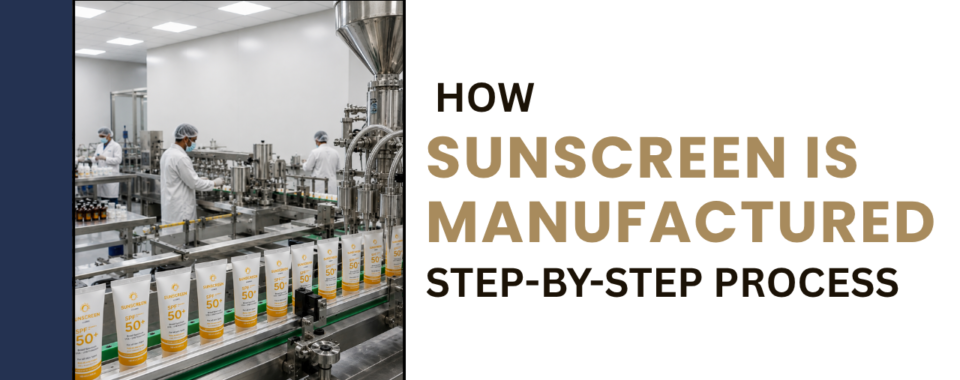
After quality approval, the sunscreen is transferred to automated filling machines.
The filling process takes place in a clean, hygienic manufacturing environment to minimize contamination.
Depending on the brand’s requirements, sunscreen may be filled into:
- Plastic tubes
- Laminated tubes
- Pump bottles
- Airless bottles
- Squeeze bottles
- Travel-size containers
Modern filling machines ensure:
- Accurate filling volume
- Minimal product wastage
- Fast production
- Consistent packaging quality
Packaging Design
Packaging is an important part of the customer experience.
A well-designed package should:
- Protect the product
- Be easy to use
- Clearly display product information
- Reflect the brand’s identity
Many brands working with Cremon Cosmetics choose custom packaging solutions to create a distinctive presence in the competitive skincare market.
Private Label Packaging
Private label manufacturing allows businesses to sell sunscreen under their own brand name.
This includes customization of:
- Brand logo
- Label design
- Packaging style
- Product size
- Color theme
- Marketing information
Private label manufacturing is an excellent option for entrepreneurs who want to launch a skincare brand without setting up their own factory.
Step 9 – Labelling and Final Inspection
Before products leave the manufacturing facility, each unit undergoes a final inspection.
Labels are checked for accuracy and compliance.
Typical label information includes:
- Product name
- SPF rating
- Directions for use
- Ingredients
- Manufacturing date
- Expiry date
- Batch number
- Storage instructions
- Net quantity
Every finished product is visually inspected to ensure there are no defects such as:
- Damaged packaging
- Loose caps
- Printing errors
- Label misalignment
- Leakage
Only products that pass the final inspection are approved for dispatch.
Why Quality Control Matters in Sunscreen Manufacturing
Quality control is not just a final step—it is an ongoing process throughout manufacturing.
Reliable manufacturers monitor quality at every stage, from raw material inspection to final packaging.
Strong quality control helps ensure:
- Consistent SPF performance
- Product safety
- Batch-to-batch consistency
- Better customer satisfaction
- Compliance with cosmetic regulations
- Reduced product recalls
- Stronger brand reputation
For businesses planning to launch a sunscreen line, partnering with a manufacturer that follows strict quality standards is essential for long-term success.
Why Ahmedabad and Gujarat Are Preferred for Sunscreen Manufacturing
Ahmedabad has become one of India’s leading destinations for cosmetic manufacturing due to its strong industrial infrastructure, skilled workforce, and efficient supply chain. The city offers easy access to quality raw materials, modern production facilities, and logistics networks that support businesses across India and international markets.
Many Sunscreen Manufacturers in Ahmedabad provide complete manufacturing solutions, including research and development, custom formulation, private label services, packaging, and regulatory support.
Gujarat also offers several advantages for cosmetic brands:
Modern Manufacturing Facilities
Many manufacturers operate advanced production plants equipped with automated machinery and strict hygiene standards.
Skilled Research and Development Teams
Experienced cosmetic chemists continuously develop innovative sunscreen formulations that meet changing market trends.
Private Label and OEM Services
Businesses can launch sunscreen products under their own brand without investing in manufacturing infrastructure.
Efficient Supply Chain
Excellent road, rail, and port connectivity enables timely delivery across India and overseas markets.
These advantages have made Sunscreen Manufacturers in Gujarat a preferred choice for startups, established skincare brands, and exporters alike.
Why Choose Cremon Cosmetics?
Selecting the right manufacturing partner is one of the most important decisions when building a successful skincare brand. A trusted manufacturer should offer more than just production—they should provide expertise, consistency, and long-term support.
Cremon Cosmetics is committed to delivering high-quality sunscreen manufacturing solutions tailored to the needs of modern skincare businesses.
What Makes Cremon Cosmetics Different?
- Advanced manufacturing facility
- Experienced formulation experts
- Premium quality raw materials
- Custom sunscreen formulations
- Private label manufacturing
- Third-party manufacturing services
- Strict quality control procedures
- Hygienic production environment
- Attractive packaging options
- Timely production and delivery
- Dedicated customer support
Whether you are launching your first sunscreen product or expanding an existing skincare range, Cremon Cosmetics offers reliable manufacturing solutions designed to help your brand grow.
Frequently Asked Questions (FAQs)
1. How is sunscreen manufactured?
Sunscreen is manufactured through a carefully controlled process that includes formula development, raw material selection, heating, emulsification, cooling, quality testing, filling, packaging, and final inspection. Every step ensures the product provides effective sun protection while maintaining safety, stability, and a smooth texture.
2. What ingredients are used in sunscreen manufacturing?
The ingredients depend on the formulation, but most sunscreens contain UV filters, emollients, humectants, emulsifiers, preservatives, antioxidants, and skin-conditioning agents. Common UV filters include Zinc Oxide, Titanium Dioxide, Avobenzone, and Octinoxate.
3. What is the difference between mineral and chemical sunscreen?
Mineral sunscreen uses ingredients such as Zinc Oxide and Titanium Dioxide to reflect UV rays from the skin’s surface. Chemical sunscreen absorbs UV rays and converts them into heat before they can damage the skin. Many modern formulations combine both technologies to deliver broad-spectrum protection with a lightweight feel.
4. What does SPF mean in sunscreen?
SPF stands for Sun Protection Factor. It indicates how effectively a sunscreen protects the skin from UVB rays, which are responsible for sunburn. Higher SPF values generally provide greater protection when used correctly.
5. What is broad-spectrum sunscreen?
Broad-spectrum sunscreen protects the skin from both UVA and UVB rays. UVA rays contribute to premature ageing, while UVB rays are the primary cause of sunburn. Choosing a broad-spectrum sunscreen helps provide more comprehensive daily protection.
6. Why is quality testing important in sunscreen manufacturing?
Quality testing ensures that the sunscreen is safe, stable, and performs as claimed. Manufacturers test SPF value, pH level, viscosity, microbiological safety, packaging compatibility, and stability before releasing the product to the market.
7. Can I launch my own sunscreen brand?
Yes. Many cosmetic companies offer private label sunscreen manufacturing, allowing businesses to launch products under their own brand name without setting up a manufacturing facility.
8. What is private label sunscreen manufacturing?
Private label manufacturing allows businesses to customize sunscreen formulations, packaging, branding, and product labels while the manufacturing is handled by an experienced cosmetic company.
Conclusion
The journey of a sunscreen product begins long before it reaches store shelves. From research and formulation to quality testing and packaging, every stage of the manufacturing process plays a vital role in delivering a product that is safe, effective, and reliable.
As consumer awareness of skincare continues to grow, the demand for premium sunscreen products is increasing rapidly. This creates exciting opportunities for businesses looking to launch their own sunscreen brand or expand an existing skincare portfolio.
Choosing experienced Sunscreen Manufacturers in Ahmedabad ensures that your products are developed using high-quality ingredients, advanced manufacturing technology, and strict quality control procedures. Manufacturers with expertise in formulation, testing, and packaging can help you deliver sunscreen products that build customer trust and long-term brand value.
With its modern infrastructure, skilled workforce, and strong cosmetic industry, Gujarat has become one of India’s leading destinations for sunscreen manufacturing. Whether you require private label manufacturing, third-party production, or customized sunscreen formulations, partnering with trusted Sunscreen Manufacturers in Gujarat can support your business growth and help you stay competitive in the skincare market.
Why Partner with Cremon Cosmetics?
When selecting a manufacturing partner, experience, quality, and innovation make all the difference.
Cremon Cosmetics is committed to helping skincare brands bring high-quality sunscreen products to market through advanced manufacturing processes and customized solutions.
We Offer:
- ✔ Private Label Sunscreen Manufacturing
- ✔ Third-Party Sunscreen Manufacturing
- ✔ Custom SPF Formulations
- ✔ Broad-Spectrum Sunscreen Development
- ✔ OEM Cosmetic Manufacturing
- ✔ Premium Packaging Solutions
- ✔ Bulk Production Capabilities
- ✔ Strict Quality Control
- ✔ Timely Manufacturing & Delivery
- ✔ Dedicated Customer Support
Whether you’re a startup launching your first sunscreen or an established skincare brand expanding your product range, our experienced team is ready to support your journey from concept to finished product.
Ready to Launch Your Sunscreen Brand?
Looking for trusted Sunscreen Manufacturers in Ahmedabad?
Partner with Cremon Cosmetics to develop high-quality sunscreen products tailored to your brand. From custom formulations and private label manufacturing to packaging and production, we provide complete end-to-end solutions designed to help your business succeed.
Contact Cremon Cosmetics today to discuss your sunscreen manufacturing requirements and take the first step toward building a successful skincare brand.